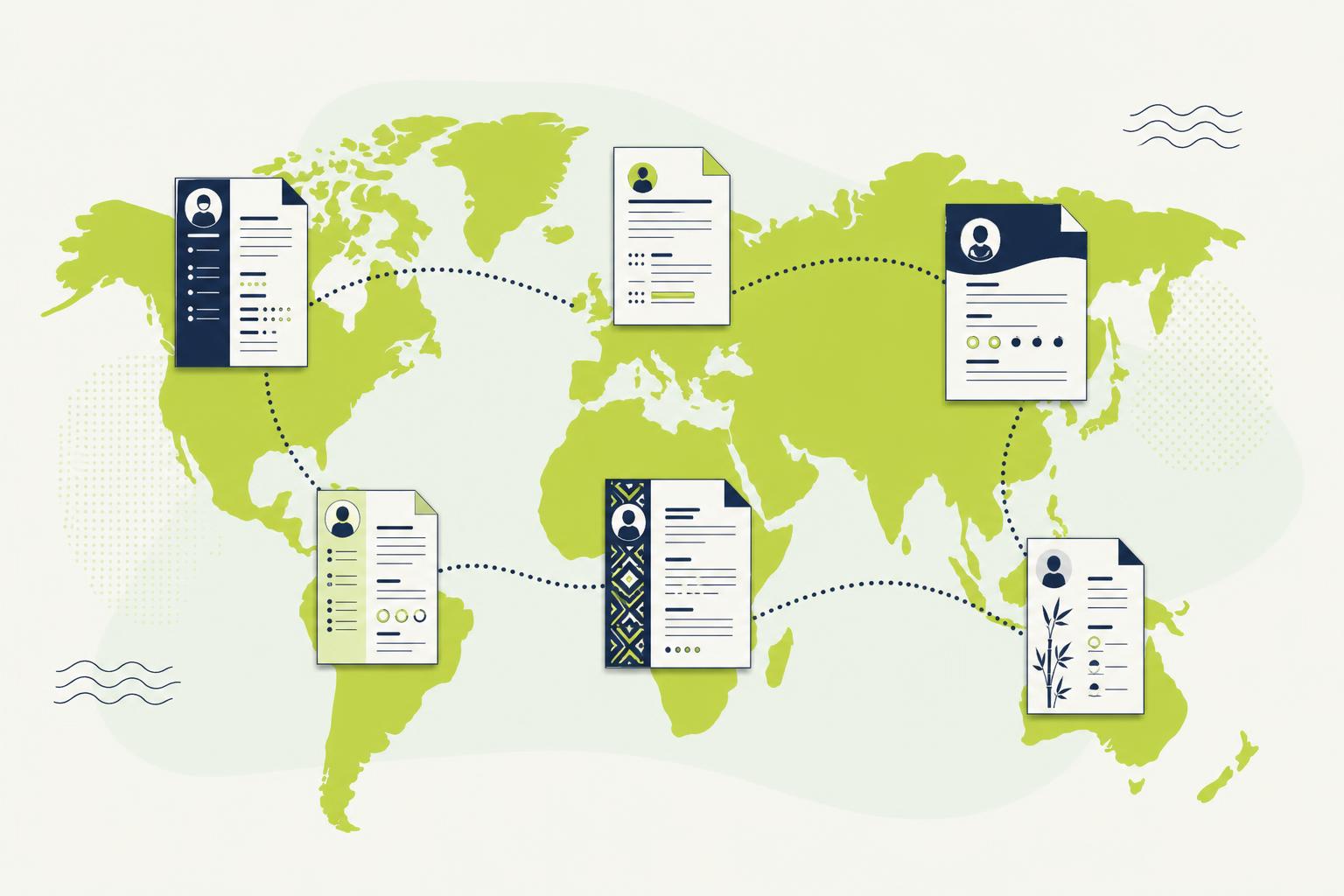
Applying for jobs internationally opens doors to exciting career opportunities, but it also means navigating vastly different resume expectations across countries. What works perfectly for a hiring manager in New York might confuse a recruiter in London, and a format that impresses in Sydney could raise red flags in Tokyo. The stakes are high when you're competing globally, which is why understanding regional resume standards is crucial for landing international positions.
Your resume isn't just a document listing your work history. It's a cultural communication tool that must align with local hiring practices, legal requirements, and employer expectations. Failing to adapt your resume for international applications can mean your qualifications never reach human eyes, either because an Applicant Tracking System (ATS) rejects it or because it violates local privacy laws. The good news is that with the right guidance, you can create versions of your resume that resonate with employers anywhere in the world.
Why Resume Standards Differ Globally
Resume formats aren't arbitrary choices made by employers in different countries. They stem from legal frameworks, cultural values, and technological systems that vary significantly across regions. Understanding these root causes helps you make informed decisions about which elements to include or remove for each market.
Legal and Privacy Regulations by Region
One of the biggest differences between international resumes involves what you can legally include. In the United States, anti-discrimination laws mean you should never include a photo, age, marital status, or number of children. According to EEOC guidelines on prohibited resume information, including such personal details can expose employers to legal liability.
The European Union operates under GDPR (General Data Protection Regulation) and national privacy laws that restrict personal data collection, yet some European countries still expect photos and personal information on CVs. This creates a paradox where tradition conflicts with modern privacy regulations. In many European markets, the pendulum is swinging toward US-style minimalism, though older hiring practices persist. Always research your specific target country's current legal landscape before submitting.
Cultural Expectations in Hiring
Beyond legal requirements, cultural values shape what employers expect to see. American hiring culture emphasizes results and impact, which is why US resumes focus on achievements and quantifiable metrics. European hiring tends to value qualifications and formal education more heavily, often requiring detailed descriptions of academic credentials. Asian markets frequently prioritize loyalty, cultural fit, and respect for hierarchy, which can influence how you present your career progression.
These aren't just stylistic preferences. They reflect what each region's employers believe indicates job performance and fit. A resume that reads as boastful in one culture might seem appropriately confident in another.
ATS Systems and Regional Variations
Applicant Tracking Systems scan resumes for keywords and formatting patterns, but these systems are configured differently across regions. A resume optimized for US-based ATS might use formatting or terminology that confuses European or Asian systems. Understanding how to test your resume's ATS compatibility for different markets is essential, as is researching which specific ATS platforms major employers in your target country use.
US Resume Format and Expectations
The United States sets the standard for modern, achievement-focused resumes that many tech companies and international corporations worldwide now follow.
Standard Length and Structure
US resumes should be one page if you have fewer than five years of experience, or two pages maximum for more experienced professionals. The format follows reverse chronological order, starting with your most recent position. Employers typically spend 6-8 seconds scanning each resume, so information density and visual hierarchy matter tremendously. Use clear section headers, consistent formatting, and plenty of white space.
What to Include and Exclude
Include your contact information (name, city/state, phone, email, LinkedIn URL), professional summary or headline, work experience with quantified achievements, education, and relevant skills. Exclude photo, age, marital status, nationality, social security number, and personal interests unless directly relevant to the role. Focus on metrics: "Increased sales by 35%" resonates more than "Responsible for sales growth."
When tailoring your resume for US positions, mirror language from the job description and emphasize outcomes over responsibilities.
ATS Optimization for US Markets
Most US companies use ATS software to filter applicants. Simple formatting works best: avoid graphics, tables, columns, and decorative elements. Use standard fonts like Arial, Calibri, or Helvetica. Include relevant keywords from the job posting, and ensure your resume can be easily parsed when converted to plain text. When implementing keyword optimization strategies, research your industry's specific terminology.
Ready to put this into practice? Start with an internationally-ready foundation using professionally designed templates that work across different markets.
Browse Templates →European CV Requirements
European hiring practices differ notably from the US, with significant variations between the UK and continental Europe.

UK Resume Standards
The UK uses the term "CV" rather than "resume" and typically runs two pages for most professionals. Like the US, UK CVs follow reverse chronological order and exclude photos (though this is less strict than in America). UK employers expect professional summaries, detailed work descriptions, education qualifications, and professional memberships. Language tends to be slightly more formal than American resumes, and soft skills matter more in the narrative.
The UK market is increasingly influenced by US practices, especially in tech and finance sectors, so you may see hybrid expectations. Always check individual employer guidelines.
Continental Europe CV Format
Continental European CVs (France, Germany, Spain, Netherlands) typically run 2-3 pages and include more personal information than their UK or US counterparts, though this is changing. Traditionally, a photo was expected, but GDPR compliance is shifting this norm. Education receives heavy emphasis, often listed before work experience or equally. Employment gaps are sometimes explained in cover letters rather than on the CV itself.
European CVs tend to include formal qualifications, certifications, language proficiency levels, and sometimes publications. The tone is more formal and credential-focused than the results-driven American approach. When choosing the optimal resume format for European applications, research your specific country's current standards, as practices evolve toward greater privacy protection.
Europass CV Template Usage
The European Union created the Europass CV format to standardize applications across member states. Many large European employers recognize and accept this format, and some prefer it because of its consistency. You can create one using the official Europass CV builder. However, smaller companies and creative industries may view Europass as rigid and uninspired. Consider creating both a Europass version and an adapted version tailored to each employer's preferences.
Asia-Pacific Resume Conventions
The Asia-Pacific region encompasses diverse markets with distinct hiring cultures and resume expectations.
Australia and New Zealand Standards
Australian and New Zealand resumes blend American efficiency with British formality. They're typically 1-2 pages, use reverse chronological order, and focus on achievements and outcomes like US resumes. However, employers also expect more detailed explanations of your roles and responsibilities. Australians tend to value practical experience and can-do attitudes, so demonstrate how you've solved real problems.
One key difference: Australian resumes often include a "Personal Details" section with date of birth and citizenship status, which is unusual in the US but expected. Include your suburb or city of residence, phone number, and email. References are often provided separately rather than listed on the resume.
Singapore and Hong Kong Expectations
Singapore and Hong Kong, as major financial and business hubs, expect resumes that balance professionalism with cultural awareness. These markets are heavily influenced by Western hiring practices, especially for multinational corporations. Resumes run 1-2 pages in reverse chronological order with emphasis on quantified results and achievements. English is the business language in both markets.
However, respect for hierarchy and formal qualifications remains important. Include your full educational credentials and list any professional certifications prominently. In Singapore, employers may ask for your passport number, date of birth, and marital status, though this is becoming less common. Be prepared to provide these details if requested, and ensure your CV highlights your adaptability and ability to work in multicultural environments.
Japan and South Korea Requirements
Japan and South Korea have markedly different resume cultures from Western markets. Japanese employers traditionally prefer a formal curriculum vitae called a "rirekisho," which includes a photo, date of birth, age, nationality, marital status, and sometimes religion or blood type. This information is considered relevant to employment relationships in Japan, despite being completely inappropriate in Western contexts.
For international positions at Japanese companies or foreign firms operating in Japan, you may need to provide both a Western-style resume and a rirekisho. South Korean hiring practices fall somewhere between Western and Japanese conventions, expecting detailed personal information but in a format closer to Western CVs. Language proficiency is highly valued in both markets, so clearly list your abilities in English and any other languages. In both countries, academic credentials and company prestige carry significant weight.
Conclusion
Adapting your resume for international jobs requires more than simple formatting tweaks. You must understand the legal landscape, cultural values, and hiring practices of each target country, then strategically adjust your resume to align with those expectations. A resume that impresses in San Francisco might fail in Stuttgart, and materials that work in Sydney could backfire in Seoul. The most successful global job seekers maintain multiple versions of their resume tailored to major regional markets.
Start by identifying your top 2-3 target markets and researching current best practices for each. Use resume keyword research strategies specific to each region and industry to ensure your resume passes both human and automated screening. Pay attention to legal requirements, particularly around personal information, as including prohibited details could result in automatic rejection or legal concerns for employers.
The investment in creating region-specific resume versions pays dividends when competing internationally. Whether you're targeting American tech companies, European multinationals, or Asia-Pacific employers, a thoughtfully adapted resume demonstrates cultural awareness and professionalism. Start building your international resume toolkit today by selecting ATS-friendly templates that you can customize for each market you're pursuing.